
Roadmap 2031: Learners Leading into the Future

Excerpted from section 3 of Roadmap 2031 - "Learners at the Center" - which is now available for download in a free digital format, and in a premium color paperback edition, for the cost of printing and shipping.

At the Outset
The very first conviction that emerged clearly and immediately from our Transforming Education Panels and Worthy Town Halls was the critical role of learner voice, choice, and leadership.
Putting learners at the center of education transformed became our first guiding principle, and it also became the organizer for the synthesis of Roadmap 2031. Sure there are other strong forces at play: societal disruption, educator efficacy, community buy-in, commercial interests, and smart technologies, to name a few. But as clusters became sections, and as sections formed a sequence of ideas making the clear, coherent case for a way forward, learners are our north star. They are the only reason the institution of education exists.
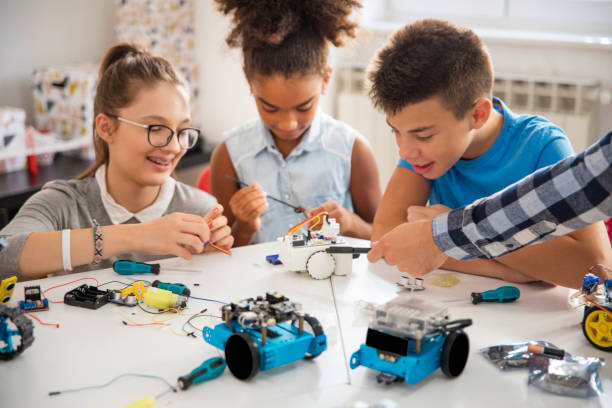
Making learners the central focus in education is important because it shifts them from being passive recipients of information to active participants who tailor their experiences to their unique needs and interests.
Key implications for this alignment of learners to the world they inherit include: Higher Engagement: Students care more about lessons that connect to their personal interests, backgrounds, and real-world questions. Better Retention: Active involvement in solving problems helps the brain store and recall information much better than simple memorization. Improved Critical Thinking: Giving students autonomy encourages them to ask questions, test ideas, and find unique solutions on their own. Life and Career Alignment: Working through open-ended challenges builds essential durable skills like communication, teamwork, adaptability, and problem-solving. Lifelong Learning: When people take ownership of what they study, they develop a natural curiosity and a lasting love for continuous learning.

Pedagogical Implications
Putting learners at the center transforms education by shifting the focus from rigid, one-size-fits-all delivery of instruction to flexible, personalized experiences that build lifelong problem-solving and value creation skills:
Student Agency: Learners gain voice and choice in their paths, turning from passive receivers of facts into active drivers of their own education.
Real-World Connection: Classrooms move away from isolated worksheets to interdisciplinary, project-based work that mirrors real-world complexity and community engagement.
Pacing and Personalization: Instruction adapts to individual needs and backgrounds, allowing students to progress based on demonstrated mastery rather than seat time.
Evolving Instructional Roles: Teachers shift from traditional classroom authorities to facilitators and co-navigators who design supportive environments and offer continuous, growth-oriented feedback.
Relational Culture: Redesigning traditional factory-model structures to foster deep trust, emotional support, and collaborative problem-solving between peers and educators.
In these ways, education transformed prepares children for the future workplace by shifting the focus from rote memorization and mastery of skills to active ownership, so that they internalize those human skills that automation cannot easily replicate. By treating each child as an active agent in their own learning and growth, education can reflect the demands of the modern, rapidly evolving society and its digital-age economy.
Fostering Autonomy and Career Agency
Traditional education asks, "How do we prepare people to meet the needs of employers?" Learner-centered environments flip this script, empowering individuals to ask, "Is this a workplace where I can grow?" By giving students a voice in their educational pathways, they develop the self-awareness, confidence, and internal drive needed to actively manage and advocate for their own careers.
Cultivating "Durable" Soft Skills According to research by America Succeeds, 7 out of the 10 most requested skills in job postings are durable, non-technical skills. Learner-centered models naturally cultivate these through collaborative and project-based learning. Critical thinking and problem solving empowers learners to navigate real-world, open-ended scenarios where they must evaluate messy data and make choices, and working in teams helps them refine interpersonal skills, resolve conflicts, and learn to articulate their ideas clearly, all skills vital in the workplace today and even more so in the future.
Normalizing Adaptability and Lifelong Learning In an economy heavily disrupted by artificial intelligence and automation, technical skills become obsolete quickly. Learner-centered design instills a growth mindset and treats education as a continuous process rather than a destination. When learners are used to steering their own educational ship, they enter the workforce highly adaptable and ready to continuously upskill.
Developing Analytical Judgment Over AI As AI assumes routine cognitive tasks, humans are transitioning into the role of pilots managing technology. Learner-centered environments emphasize analytical judgment—teaching students to question, vet, and ethically evaluate AI outputs rather than blindly outsourcing expertise to automated systems.
In all these ways, it is critical that educators reclaim the narrative on teaching and learning, emphasizing that giving learners voice is giving learners agency. Listening to student input moves them from compliance to self-direction as they express their thoughts, needs, feelings, and values about how they learn today and how they contribute tomorrow. Moreover, having the power and capacity to act on those ideas, set goals, and steer the learning process shifts the dynamic from the learning space to the workplace.
Beyond Learning Spaces
In the third section of the Roadmap, school superintendent Dr. Marnie Hazelton serves as the lead helping us to bring together voices of educators everywhere who believe that learners at the center of education goes beyond the power structure of the learning space. There is so much more at stake, such as:
Learners at the Center of our Humanity Learners at the Center of Global Awareness Learners at the Center of Relationships Learners at the Center of Decisionmaking Learners at the Center of Community, and Learners at the Center of Problem-Solving
Because assessment has been the tail wagging the instructional dog for years, the Roadmap calls for new ways forward that redefine learner success. A learner-centered approach looks at the whole child, evaluating how well a learner adapts, creates, and solves real problems. Advancing when a learner proves they understand a concept, rather than tracking the number of hours they sit in a classroom, and gathering a diverse mix of reflections, projects, and peer and teacher feedback over time, we shift towards authentic, transferable skills like communication, teamwork, and critical thinking that matter in this new world in which we live. Ultimately, determining a child’s success based on their own unique growth, rather than ranking them against other learners, breaks the hold traditional one-shot assessments and standardized testing have on how we measure learner success.
Beyond traditional metrics, street data - a more human-centered and asset-based model – tracks learner success into their adult lives, collaborating with them and the wider community to collect qualitative information over time. Unlike traditional academic records, which end at graduation, street data focuses on lived experiences using qualitative tools to collect rich, narrative data that follows learners’ development into adulthood. We can conduct alumni interviews periodically to conduct qualitative interviews to understand career paths, personal growth, challenges, and what
resources are most (and least) valuable.
Asset-based alumni networking helps to build a profile of success that highlights how graduates are using their skills, cultural knowledge, and experiences to thrive, creating a more holistic view than traditional metrics, and community feedback loops get input from graduates, employers, and local leaders on how effectively the education system is meeting the needs of everyone in the community, providing a broader perspective on alumni success than individual data alone.
Of course, this kind of long-term collection and storage of personal information about graduates requires careful ethical considerations, defining and sticking to a narrow, educational purpose for tracking alumni data, ensuring it’s not misused for unauthorized purposes. We also need to protect sensitive personal information from breaches to protect everyone’s privacy, and we need to be mindful of the power dynamics between these systems and former students, ensuring that participation is genuinely voluntary and not implicitly coerced. While this kind of long-term analysis of individual journeys from learner to adult local resident can be invaluable, we acknowledge that the definition of success is unique and relative to each individual subject.

Making this Happen
Helping lead the transformation of education, learners inform how we evolve our role, making teaching and learning more dynamic, collaborative, and effective through the processes of feedback and co-creation. They create continuous, real-time professional growth opportunities for us that are directly relevant to our work. When children make self-directed choices, we gain insights through a direct feedback loop, observing them exploring topics at their own pace and depth, providing a clearer view of individual needs so that we can offer more sophisticated, differentiated instruction.
Download your copy of #Roadmap2031 and immerse yourself in the full impact of the third section on Learners at the Center, and then the in the full promise and potential of this important work. It is our hope that, after experiencing it, you will join your brilliance to ours, and together, we can create the conditions for education transformed to take place!

Continue reading section 3, "Learners at the Center" by downloading Roadmap 2031 and its workbook:

Roadmap 2031 is a way forward for educators doing the work in schools. Available in a free digital version with a workbook companion, as well as in paperback for the cost of printing and shipping, it's the culmination of years of experience and expertise crystalized through Transforming Education panels and Town Halls in 2024 and 2025, charting a way forward for everyone who cares about children, their future, and our global society. Learn more and get your copies here.



Comments