


Javeria Rana: What 500 Schools Taught Me About Education
- Feb 28
- 3 min read
Updated: Apr 2


Lessons in Leadership, Teacher Capacity, and the Future of Learning
Education is often discussed through policy reforms, curriculum frameworks, and institutional strategies. Yet after working across a network of more than five hundred schools—spanning diverse communities,
classrooms, and learning environments—I have come to understand something far more fundamental.
Education systems do not change through documents. They change through people.
Over the past decade, my work first as classroom teacher, curriculum
developer, trainer and then as Director Academics at Unique International Educational Services (UIES) has allowed me to observe teaching and learning across hundreds of schools. Through this journey,
I have also had the privilege of training more than 5,000 teachers across
Pakistan, both within our school network and through professional development programs delivered through the Unique Professional Development Institute (UPDI) and other organizations.
These experiences have shaped my philosophy of education in profound ways.
Working across hundreds of schools has not simply given me scale. It has given me perspective. And that perspective has taught me that education systems are not static institutions. They are living ecosystems shaped by leadership, teacher capacity, student curiosity, and community trust.
Lesson One: Teachers Are the Real Engine of Educational Change
Education reforms often begin with curriculum redesign, policy announcements, or new assessment systems. Yet across hundreds of schools, one truth has repeatedly revealed itself:
Educational reform moves at the speed of teacher capacity. No policy—no matter how well written—can transform classrooms unless teachers are empowered to bring that vision to life.
This realization led us to prioritize teacher development across our network. Through UPDI, we have invested heavily in building teacher expertise across areas such as:
differentiated instruction
project-based learning
Bloom’s taxonomy and higher-order thinking
ESL and multilingual learning strategies
design thinking in education
technology-enhanced learning and AI integration
Professional development is not simply about techniques. It is about cultivating professional identity.
When teachers begin to see themselves not as implementers of
curriculum but as architects of learning, the culture of a school changes.
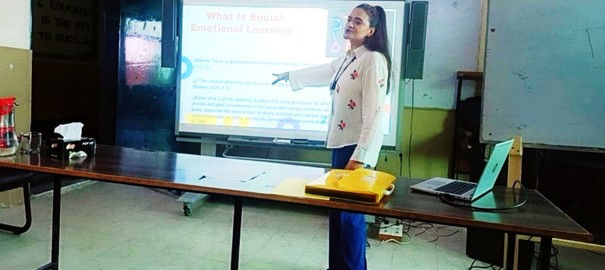
Lesson Two: Leadership Determines Whether Schools Stagnate or Evolve
Across hundreds of schools, I have witnessed institutions with similar
resources produce dramatically different outcomes.
The difference is rarely infrastructure. The difference is leadership.
School leaders shape the emotional and intellectual climate of a school. They determine whether teachers feel empowered to innovate or pressured to comply.
Modern educational leadership must move beyond administrative management. Leaders must become:
adaptive thinkers, able to respond to rapid societal and technological change
builders of trust, capable of creating collaborative cultures
designers of learning environments, not merely supervisors of systems
Scholars such as Michael Fullan and Andy Hargreaves have long emphasized that sustainable school reform depends on leadership that builds professional capital rather than enforcing compliance.
Across our school network, the most successful campuses are those where leaders invest deeply in teacher collaboration, reflective practice, and
shared ownership of learning.
Lesson Three: Real Reform Happens in
Classrooms
Education debates often occur far from classrooms—inside policy forums, conferences, and strategy meetings.
But real change happens when a teacher stands in front of students and
decides how learning will unfold.
It happens when:
a teacher invites students to question rather than memorize
a classroom becomes a space for curiosity and experimentation
learning connects with real-world challenges
teachers design remarkable learning experiences
students explore sustainability through SDG-aligned projects
classrooms experiment with inquiry-based learning
teachers integrate digital platforms to encourage collaboration
These classrooms remind us that the future of education is not simply
about technology.
It is about rethinking how students engage with knowledge, with each other,
and with the world.
Lesson Four: Professional Learning Must Be Continuous
One of the most important insights from training thousands of educators is this:
Teacher development cannot be an occasional event. It must be a continuous culture.
Through UPDI and other professional learning programs, our goal has been
to create environments where teachers can:
- reflect on their classroom practices
- collaborate with peers
- explore emerging pedagogies
- engage with global educational conversations
Research in professional learning communities shows that when teachers collaborate regularly and reflect collectively on practice, schools become more adaptive and resilient.
Teaching is not a static profession. It must remain a learning profession.

Lesson Five: Students Must Be Prepared for an Uncertain Future
The world our students will inherit is profoundly different from the
one we grew up in.
Artificial intelligence, climate change, digital transformation, and global interdependence are reshaping society.
In this environment, education must prepare students not only to pass exams but to navigate complexity.
Students need to develop:
- critical thinking
- creativity
- collaboration
- adaptability
- ethical responsibility
Across our schools, we increasingly emphasize learning experiences that develop these competencies through project-based learning, interdisciplinary exploration, and technology-supported collaboration.
Preparing students for the future requires more than content knowledge. It requires preparing them to think, question, and create.
The Five Pillars of Transformative School Systems
(A Framework Emerging from 500 Schools)
After years of working across hundreds of schools, I have come to see that strong education systems consistently share five characteristics:
Teacher Capacity Schools invest deeply in teacher development and professional learning. Adaptive Leadership Leaders create cultures of experimentation rather than rigid compliance. Learning Innovation Classrooms move beyond rote learning toward
inquiry and creativity. Student Agency Students are not passive recipients of knowledge but active participants in learning. Community Partnership Schools collaborate with families and communities to strengthen learning ecosystems.
These five pillars form the foundation of future-ready school systems.

Education Is Ultimately About Human Possibility
Working across five hundred schools has revealed something deeply inspiring.
In every school—no matter how modest the resources—there are teachers who go beyond expectations, leaders who believe in their communities,
and students who carry extraordinary aspirations. Education is not merely
about curriculum or policy. It is about human possibility.
The philosopher Paulo Freire once argued that education should empower
learners to read not only the word but the world. When schools succeed in doing this, they do more than transmit knowledge—they cultivate citizens capable of shaping society.
The Journey Ahead
The lessons from five hundred schools have reinforced a simple conviction.
If we want to transform education, we must invest in:
- teacher expertise
- visionary leadership
- meaningful student engagement
- collaborative communities
Education systems evolve not through isolated reforms but through
sustained commitment to learning.
And after years of walking through classrooms, training teachers, and
working alongside school leaders, I remain convinced of one thing:
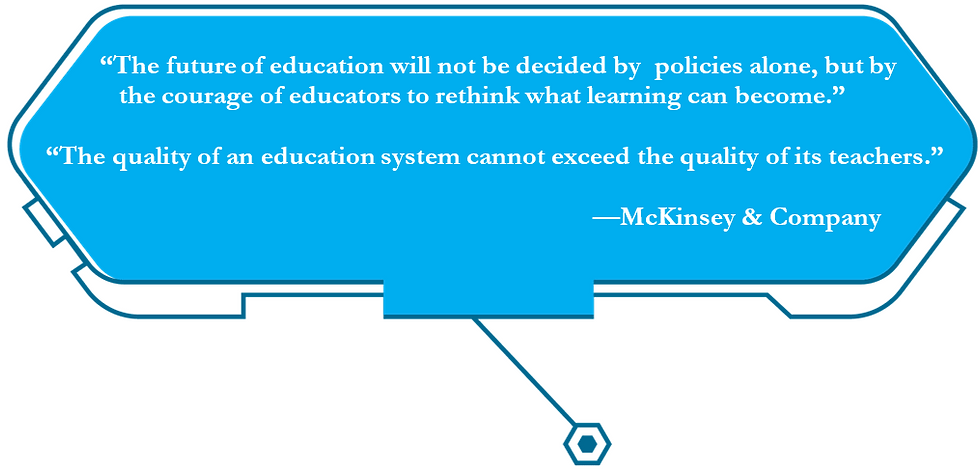
The future of education will not be built in policy documents.
It will be built by educators who believe deeply in the transformative
power of learning. Because every great education system begins with a simple act of belief:
the belief that every child, in every classroom, has the potential to
shape the future.

Citation: Rana, J. (2026). “What 500 Schools Taught Me About Education.” Washington, D.C.: The Worthy Educator. https://theworthyeducator.com/javeriarana.

Future-Ready Schools is an exclusive feature by Javeria Rana on The Worthy Educator. Check back regularly for new insights on education transformed!



Comments