

Beyond Boundaries: The Human Touch Needed in an AI World

Key Takeaway: Can AI replace artists and teachers? Or do humans need the beautiful messiness of our peers and mentors?
Introduction: Kim Petras Kills It
My husband and I went to see Kim Petras last fall on her Feed the Beast tour. If you don’t know who Kim is, she’s an LGTBQ singer who makes awesome bops.
I was blown away by the spectacle of the show. The tour set pieces were some of the most ambitious I’d ever seen in the Aragon Theater. There was a three-tiered stage, a video screen, rotating floors, and a drop zone. [I…don’t think that’s the actual name of what it is, but it was a hole in the floor where people (and monsters :D) could pop in and out of.] Kim is a prolific artist, so there were at least four act changes (which included costume and set piece transformations) to match the tone of her different EPs and albums.
Because of the scale of the show in the smaller venue, there were some messy bits. A few times props or set pieces didn’t function as planned. Kim and the dance team were marching up and down the steps, so there were some stumbles. I think it may have been an earlier show in the tour, because, during one choreographed piece, she actually said something to the effect of, “This song is long and a bit boring. We’re coming hard in the next song!”
I don’t say any of that as critique of the show. It was really, really good. And, as we were leaving, I told my husband that those messy bits made me like her even more. She is a talented artist going BIG for her fans. The issues happened because she was giving us the biggest and best show possible (even if the stage pieces didn’t quite fit in the venue). There were some stumbles, but it was in service to the scale and generosity of the performance she wanted to give us.
Could There be a Kim PetrAIs?
The show got me thinking, though, about the current news cycle. One that has been flooded with stories about how AI is going to eliminate the need for humans and creativity.
I actually liked the show because of the flaws in the system. It showed that there was someone real and ambitious behind it. And, I mean, isn’t that what really good art is writ large?: The empathetic connection between creator and audience as they strive to figure out the messy bits of existence?
Don’t get me wrong, I think at some point in the near future, there will be a whole section in the airport bookstore that is just for “Bot Books” — fiction written by robots to perfectly match genre expectations. Detective Steely O’Grady will thwart baddies and solve crimes like a crime ChatGPT; Anastasia Goodlookington will fall in love over and over again according to tropes established by Jane Austen. There will definitely be a place for those. Heck, I may purchase some when I’m headed to the beach and just want to relax and enjoy a streamlined plot.
But, there will still be those missing pieces of connection. Yes, there will be entertainment. Yes, creative objects can be created by robots, but can they bring catharsis?
Even if in the year 2045, music labels have AI writing songs and AI holograms performing on stages, it could be an amazing show. Holo Diva could connect with fans via online chatbot functionality and virtual posts about her “life”. But anything constructed for that “artist” would be solidly built on the human genius that came before; every dance movie, song, and chord would have a human touch on it that was swept up by an algorithm.
It’s actually terrifying… But would there be a world where people would rather see Holo Diva than a real person?
I think yes and no. The world will probably have space for both. Some could even argue that we already exist in that reality. What is this latest round of Marvel movies but bureaucratically-created, computer-generated nightmares?
I recently posted about the brilliance of specificity in writing, and I think it comes into play here. A real human writing a real song and, in turn, singing about that experience is going to be filled with tangible details that we connect to. The better the writer, the stronger that connection can flow into the audience.
I think there is an imminent moment when we will have AI artists and human artists working side by side and competing. But I think there will always be space for human artists. Humans are driven to create; it’s part of our DNA and culture.

Which brings me to another meandering thought that arose in the past few weeks tied to this topic.
Can AI Break Boundaries?
I’ve been really into the 100th anniversary of Walt Disney Studios over the past few months (see last month’s post). I think Disney is a genius, and I love learning about how he fostered creativity at his studio.
While re-watching the 100th-anniversary edition of Snow White and the Seven Dwarfs and the bonus content, I found some really wild stuff about the making of the movie.
People called it “Disney’s Folly”, and, it was a legitimate concern that people would start going
blind if they watched a cartoon for more than twenty minutes because the colors were too intense.
That was a legitimate thought. Seriously.
Disney forged ahead with the project even when the press and his peers relentlessly told him it was a crazy idea. For two years he labored with his team to get the movie done. One of my favorite lines in the whole making-of documentary was when one of the animators said something to the effect of: “It was an incredible and fun creative project, but we were pretty sure that was the end of the studio. Who wants to watch a 90-minute cartoon?”
There are so many incredible creative takeaways from the making of that movie. At the core: How did Disney somehow convince all these people to chase an, at the time, “impossible” goal?

But, as the story unfolded, I couldn’t help but wonder: Is there a reality where AI could do this?
And, I really don’t think so. AI is built from what is known and what has been done. I don’t think there is any future iteration of it that would take all the historical data and say, “Eff it. We’re making a feature-length cartoon even if it may make people go blind.”
Which made me feel waaaaaay better than my initial thoughts about Holo Diva. I think we’re pretty safe as a creative species since AI can generate more of what’s come before but can’t break us into the unknown.
Snow White is just one crazy idea in a long line of things that have changed the world: the concept of the earth moving around the sun, flight, the discovery of germs, the personal computer, etc. And I don’t think AI is going to be able to replace the human ability to create those unfathomable things, because, quite honestly, it’s not brave (or dumb) enough to.
I can actually picture an alternative reality where Walt Disney asks his AI assistant what he should do with Snow White.
“So, I’m thinking we make it 90 minutes.”
“Mr. Disney, the people will go blind!”
Walt shuts the robot down.

On Teaching in an AI World
We need this kind of rogue, Disney courage more than ever. Those like him and Kim Petras, humans that are generous in spirit, creativity, and ambition—If for no reason other than to inspire the youth and keep the next generation pushing boundaries.
AI has come to schools with a furious vengeance. In Chicago a teacherless environment has replaced real teachers with AI-assisted “guides”.
The early data around these institutions sounds great, but the value of an education isn’t simply in learning rote items for tests. When humans talk about their favorite teacher or area of learning, it’s often has nothing to do with what they learned, but how the teacher made them feel.
It was the human support they got when they were floundering; the cheerleading when they found success; the passion that helped many students find their own way in the world.
Could Holo Diva and Holo Teacha both have a place in our future world? It’s very likely. But will they foster a world that pushes students to break boundaries and find their passionate calling?
The AI in Alpha Schools is built in a closed system with parameters set by required curriculum. Will that bot be able to encourage students to go beyond the classroom and explore interests that don’t come from the closed learning environment? Will they be able to create an army of Walt Disney's who fight against the standard logic of the day? Will they foster the environment of a Kim Petras who builds beyond what’s logical to provide something incredible for her fans?
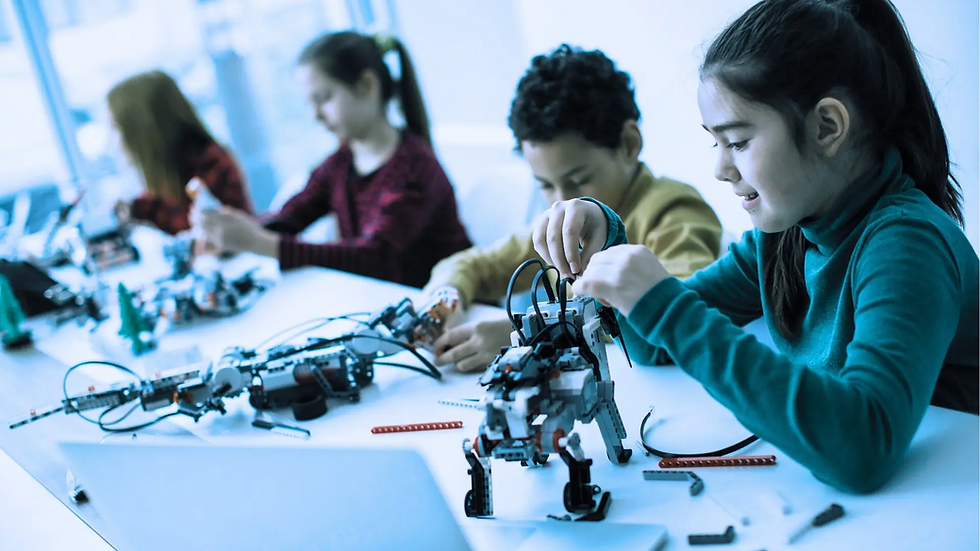
It seems doubtful. The AI works in set boundaries. Human potential verges on the limitless.
Hopefully, those AI schools use their excess time to create challenging learning opportunities outside of the standard curriculum that help students think bigger than an algorithm, that provide the opportunity for them to engage with mentors and teachers and get inspired.
Conclusion
I feel like, inadvertently, I made this post, in structure, an homage to messiness in creativity. We covered some topics, I had some thoughts, and now it’s over.
But I do end this post feeling, personally, better about how AI and humans will work together in the future. Yes, we may see more AI art and instruction, but that may even drive us to break boundaries faster. If a robot can do it, then what can’t it do? What new frontier hasn’t yet fed into its language model? What previously held assumption can we destroy to make something new?
If I can bring it back to Snow White, we’re at the part in the woods when she’s running around and screaming frantically trying to escape. It’s messy, scary, and unknown, but she’s on the way to an adventure that will change her life. So, just buck up, keep moving and push forward. Follow the creative path and work with AI, but don’t be afraid to run off on your own. If you need a rallying cry, the Dwarfs give us the perfect one a little later in the movie. Yell it whenever you run against a boundary and some computer tells you it’s not possible. “Fie, computer. And Heigh-ho!”

Tedd Hawks is a writer, learning designer, and editor from Chicago. He writes across genres, including LGBTQ literary fiction, YA, murder mystery, and science fiction. For over twelve years, he’s developed learning and coaching programs for businesses, individuals, and leaders. He has his MFA from Northwestern University and currently works as a developmental editor and certified book coach. Connect with him at tapyourcreativity.com.
Coming on our 2nd anniversary, July 8th: Roadmap 2031!


Comments